High Reliability Organizations

HRO Through Human Centered Design

What does being a high-reliability organization (HRO) mean?

How can we apply high-reliability concepts to healthcare organizations?

Over the last several years, these two questions have been asked of countless leaders throughout healthcare. The answers are not as uniform as expected, and they shouldn’t be. The most communal answer to the first question would be that organizations that strive to become high-reliability organizations aim to reduce patient harm over long periods. There is more uniformity and consensus framed around that first question. The second question is where we undoubtedly see an area of opportunity through applying a design thinking approach.

What we have learned

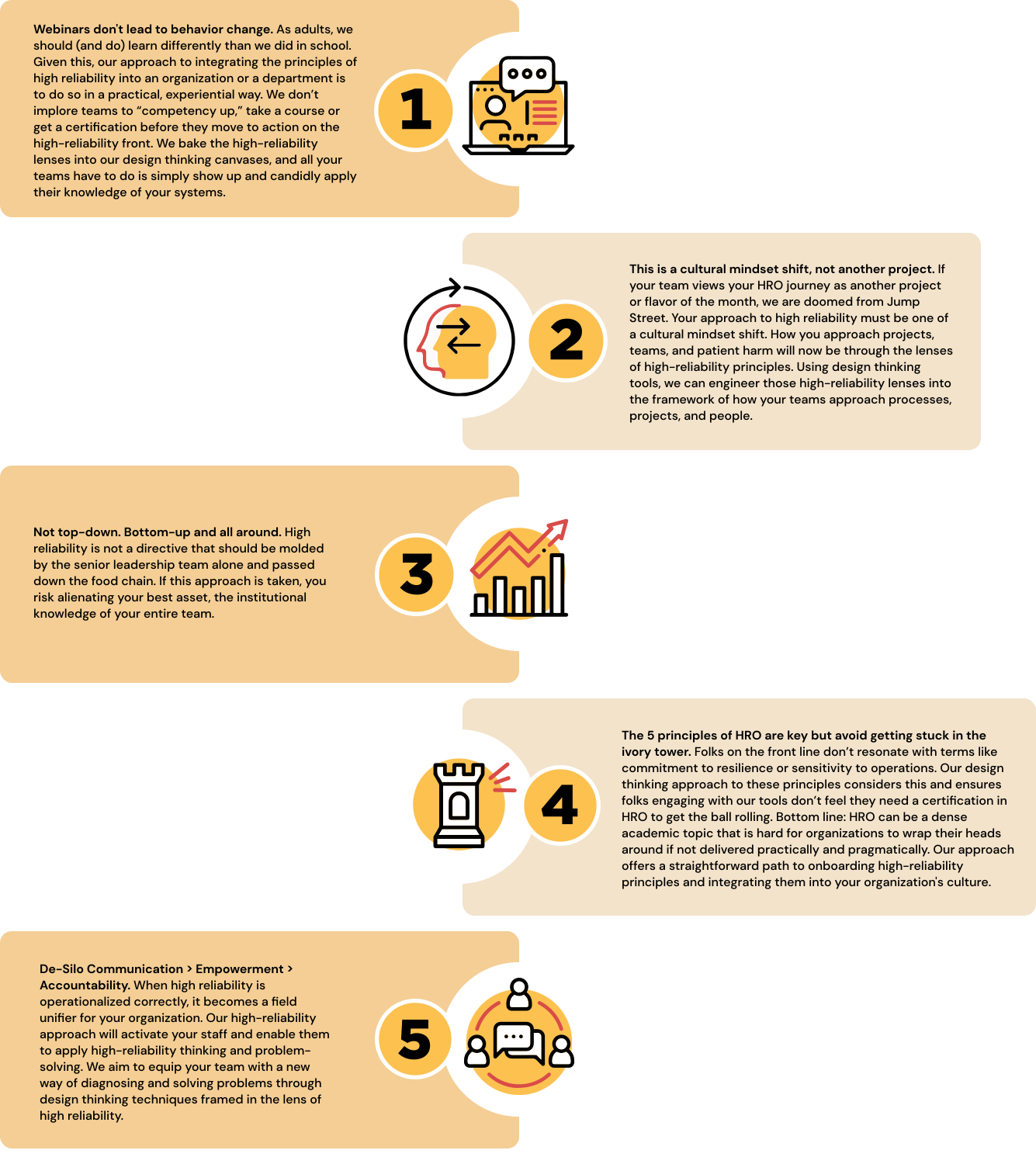
We’ve learned a few things after working with more than 80 hospitals in Illinois to embed high-reliability concepts into organizations. As Thomas Edison said, “I have not failed. I’ve just found 10,000 ways that won’t work.” Our high-touch engagement with those hospitals over a few years demonstrated a handful of truths:

Our Process

Tools

DoTank has developed specific design tools for each of the five pillars of high-reliability organizations: sensitivity to operations, preoccupation with failure, reluctance to simplify, commitment to resilience, and deference to expertise. We marry human-centered design with HRO principles to create a suite of tools that guides organizations through an HRO assessment process and into strategic action.

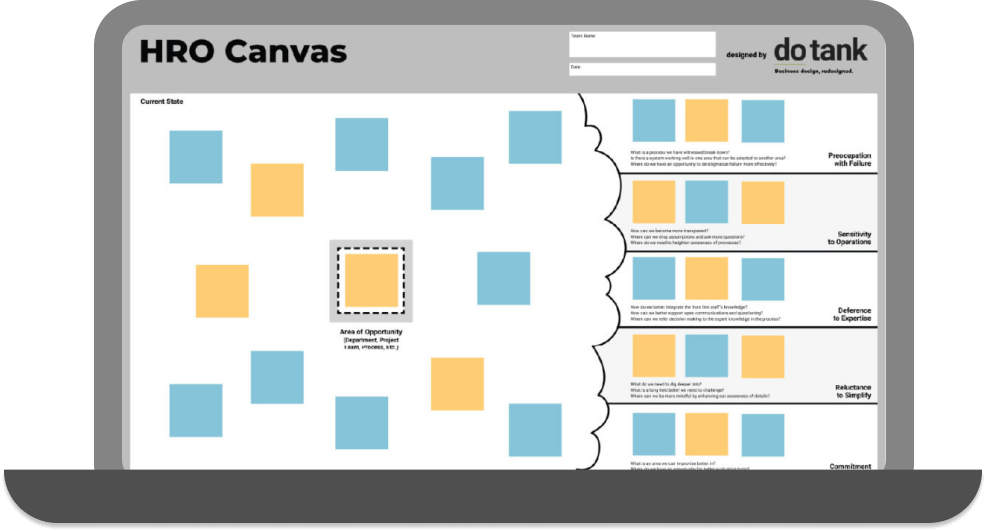
HRO Canvas

This canvas is useful as you explore applying tried and tested principles of high-reliability organizations to your healthcare organization to align teams on a process to minimize harm. The 5 Principles of High-Reliability Organizations are Preoccupation with Failure, Sensitivity to Operations, Deference to Expertise, Reluctance to Simplify, and Commitment to Resilience.

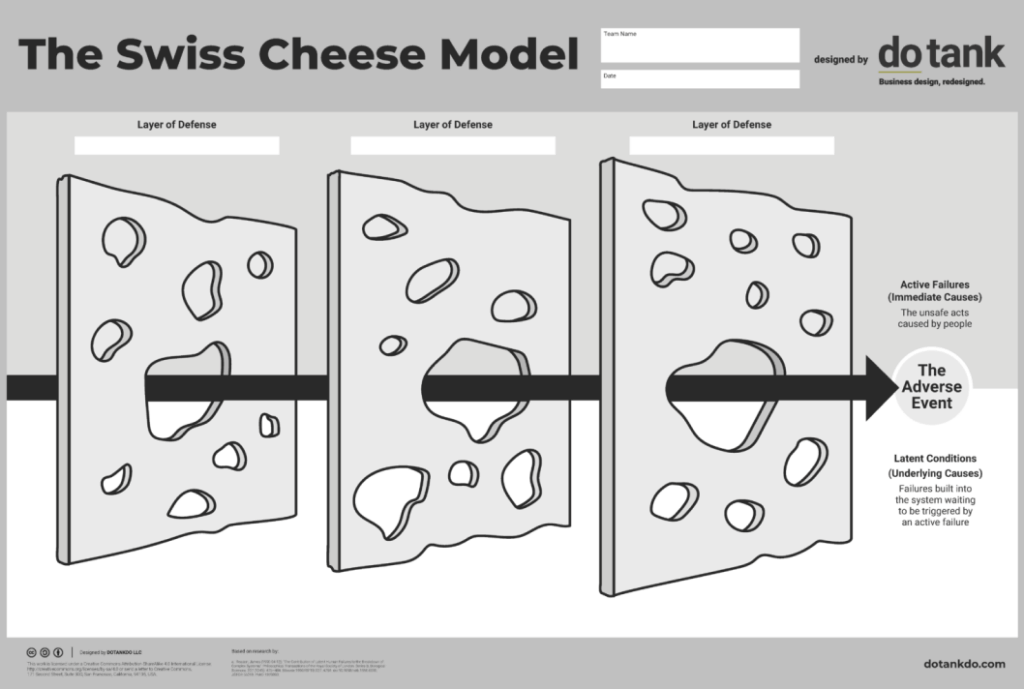
The Swiss Cheese Model

The Swiss Cheese Model Canvas translates the classic quality and patient safety theory into an operational tool. All teams that we start an HRO journey with utilize this tool out of the gate to get those RCA muscles going and begin ideating the causes which may be leading to adverse events.

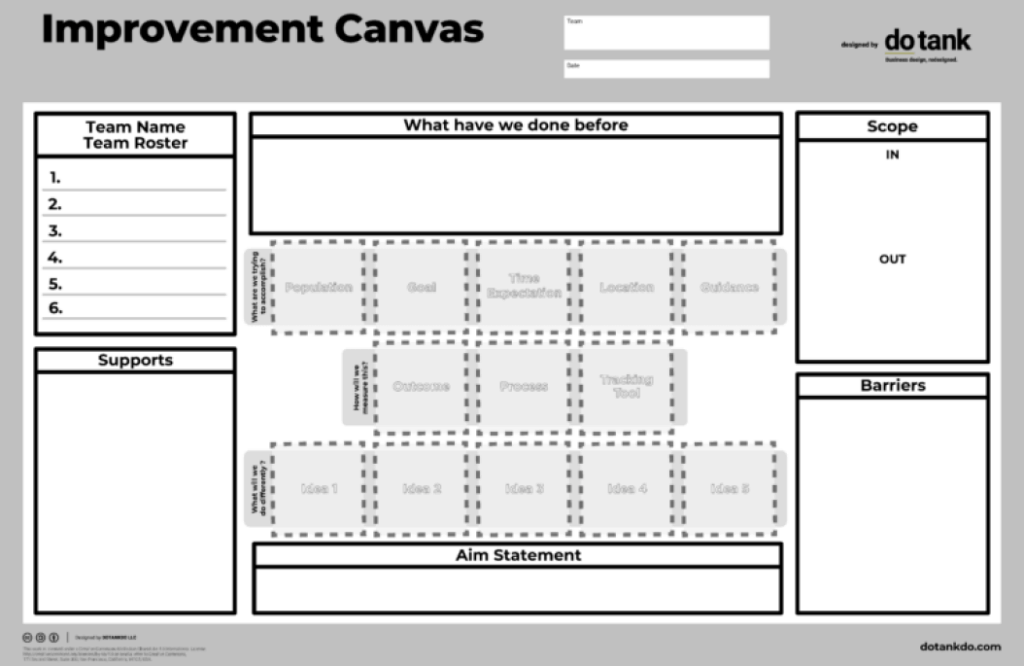
Improvement Canvas

After we complete the HRO assessment on a specific project, department, or outcome, then we move to apply quality improvement rigor through human-centered design in order to produce results. The Improvement Canvas utilizes the model for improvement to establish an aim statement and high-level project plan. Identify your team, what supports and barriers you may have, what is in and out of scope on your project, what you have done before in the space that might be similar, your accomplishment goals, your process metrics, and your change ideas. This is the tip of the spear in our QI toolbelt, which helps translate HRO principles into action.