


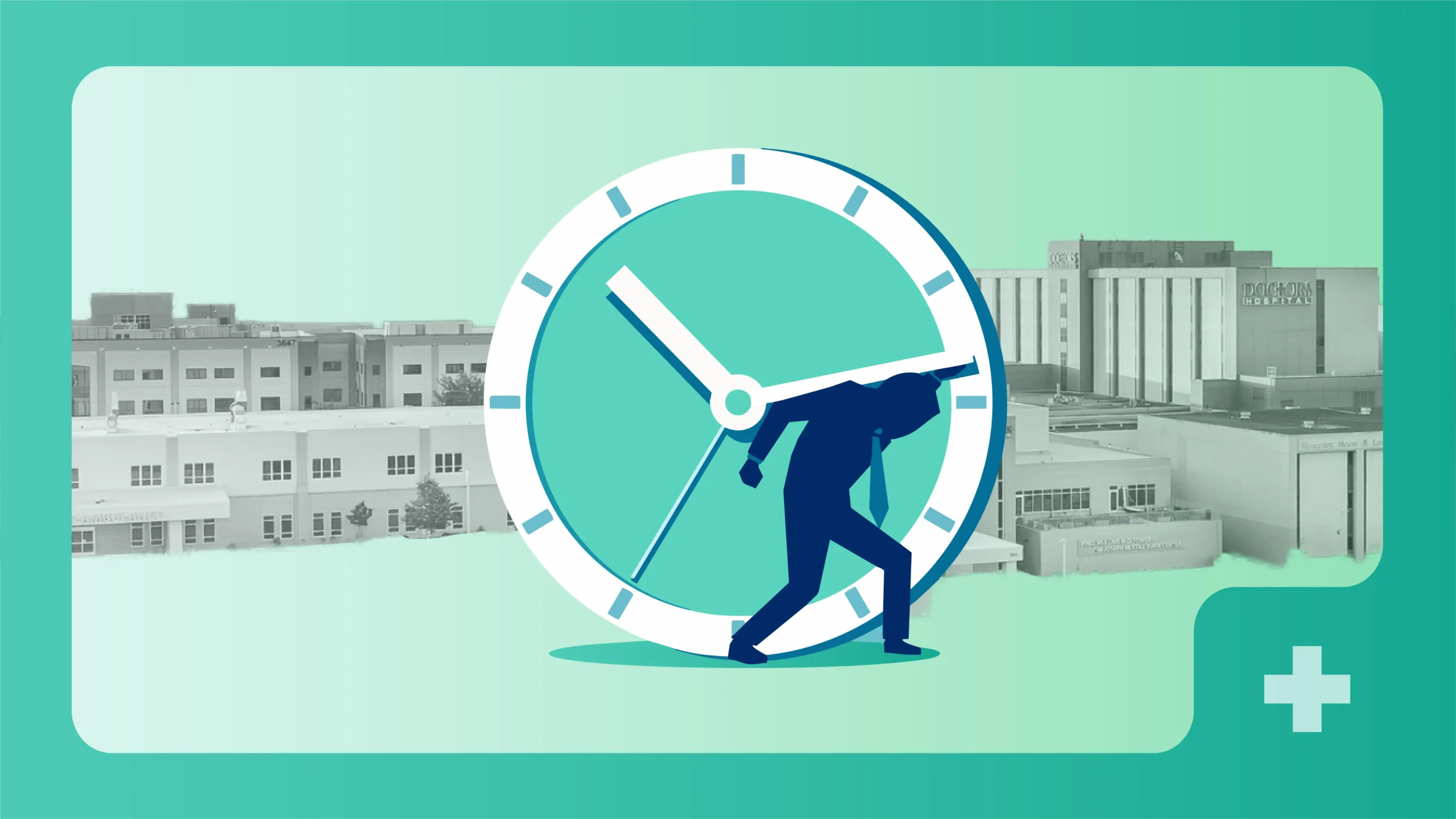
Do Tank helped a large Midwestern integrated health system address a recurring patient-safety risk by creating a clear, system-wide approach for how clinical teams communicate during digital outages. Working with leaders and frontline staff, the organization redesigned downtime workflows and put consistent protocols in place across eight hospitals. Outcomes of this work included strengthening coordination, reduced risk of care delays, and restored frontline confidence in technology-enabled care delivery.
Secure messaging had become essential infrastructure for clinical coordination, but reliance on a cardiac-specific platform exposed a major risk: there was no shared contingency plan when outages occurred.
During failures, teams faced confusion about escalation pathways, alternative communication methods, and accountability for decisions. This disrupted medication administration, delayed surgical coordination, and created unsafe conditions. Leaders recognized the challenge was not purely technical — it reflected gaps in governance, workflow design, and workforce readiness across sites with different resources.
Do Tank’s Role:
- Reframed downtime preparedness as a system design and patient-safety priority
- Led human-centered discovery with clinicians, operational leaders, and executives
- Facilitated cross-site design sessions to define standardized protocols
- Guided rapid prototyping and pilot testing in diverse hospital environments
The initiative began with a rapid assessment of current downtime experiences, combining incident report analysis with interviews and frontline engagement. This discovery work clarified root causes: unclear ownership, inconsistent escalation protocols, and insufficient training.
Do Tank facilitated cross-functional design sessions that brought clinical leaders, educators, and operational managers together to define the essential elements of a resilient downtime ecosystem. The emerging model established non-negotiable system-level standards — such as alerting protocols and governance roles — while allowing each hospital to tailor workflows based on its resources and staffing.

Concepts were tested through low-fidelity prototyping and targeted pilot implementation at representative sites. Feedback loops helped refine communication pathways, training requirements, and recovery procedures. Implementation was supported by tabletop simulations, drills, and the creation of a digital knowledge hub that provided a single source of truth for policies and educational materials.
The health system moved from fragmented responses to a coordinated operational model that strengthened both safety and organizational confidence. Clear accountability structures and standardized communication protocols enabled staff to respond more effectively during outages.
Equally important, the engagement built internal capability. Leaders gained a repeatable approach for addressing complex operational challenges associated with digital transformation, and teams developed greater readiness to manage future disruptions. What had been a reactive vulnerability became an institutional strength embedded within the system’s ongoing performance and risk management efforts.
This work highlighted how patient-safety risks often emerge at the intersection of technology, process, and culture. By engaging frontline teams in solution design and testing ideas before scaling, the organization built a practical model for reliable communication during disruption — and strengthened its broader capacity to manage complex change.